
Building My Pottery Studio in the Cairngorms
For years, I made pottery in other people's spaces. My first two studios were shared, which had its own kind of energy. There were other makers around and that lovely sense of a working community, but never quite enough room, or quiet, to fully settle into my own process.
My last studio before this one was better in some ways. It was a converted mechanic's lock up, squeezed between an actual mechanic on one side and a woodworker on the other, so it was rarely quiet. It was cold. There was no hot water. Natural light was in short supply. But it was a two minute walk from my flat and I had genuinely lovely neighbours, so I made it work for a long time.
When I moved back to the Cairngorms earlier this year, I finally had the opportunity to create a pottery studio of my own. I converted the double garage attached to our home in Carrbridge into a permanent workspace for Kim Plimley Ceramics, and it took the first few months of the year to get it right.
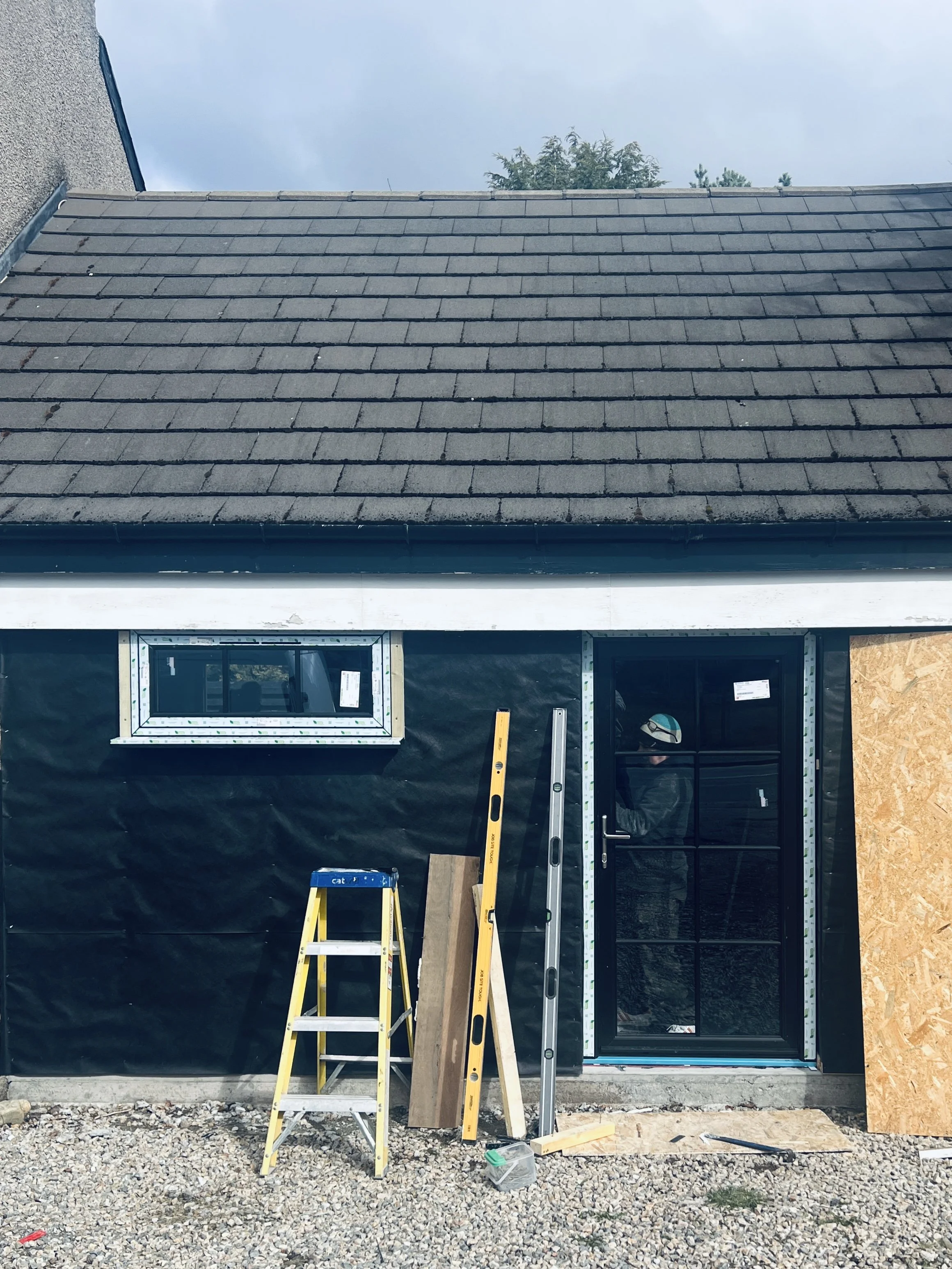
The not quite so glamorous beginning: converting our double garage into a working pottery studio
I don't think I fully understood how much my old space had been limiting me until I didn't have those limitations anymore.
Room to make
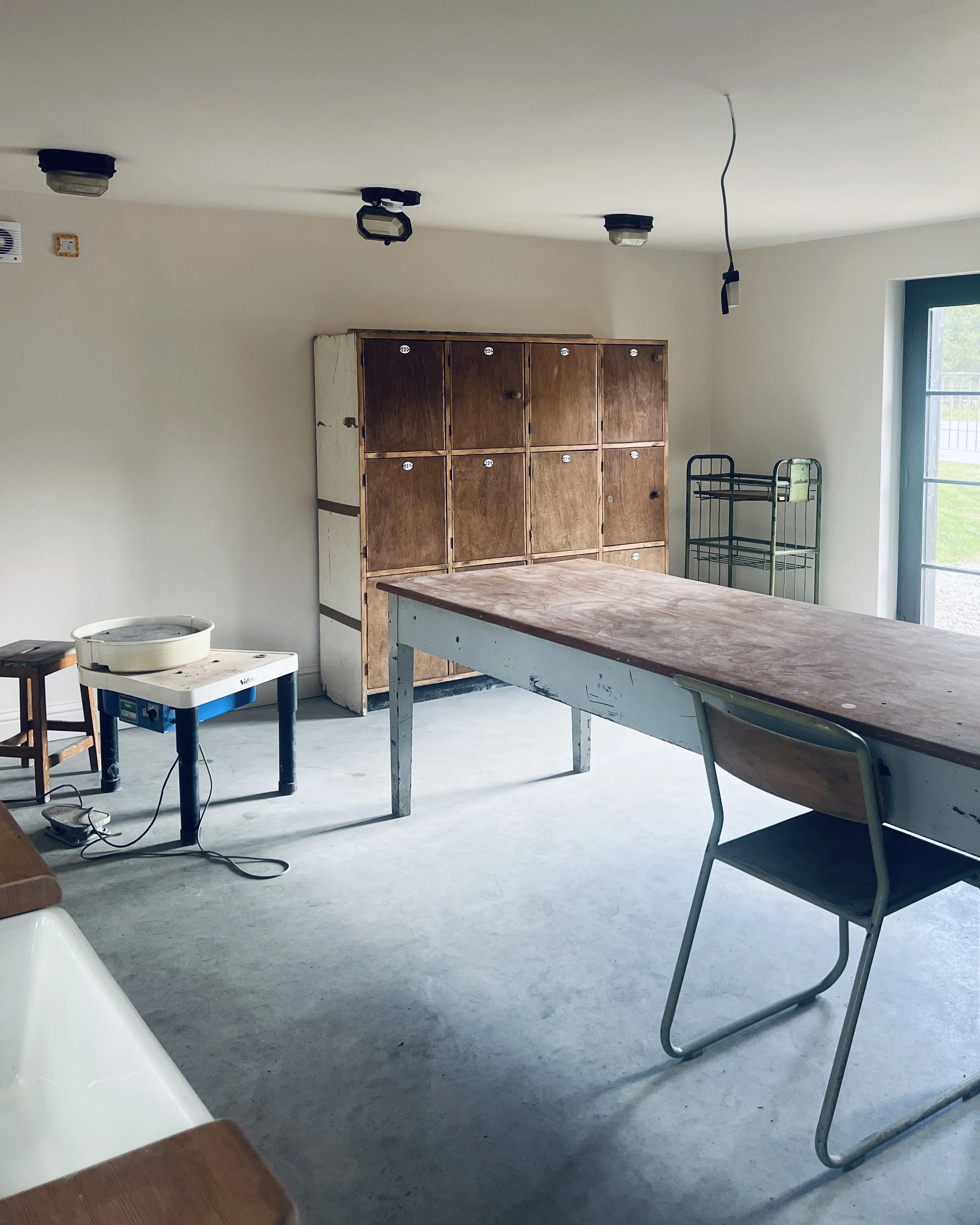
Moving in day… a dream come true
The most obvious change is space. I now have actual room to work without constantly rearranging things to switch between throwing, trimming, glazing, packing and photographing. I have two additional workbenches, plenty of storage and enough room around my wheel to work comfortably.
But some of the less obvious decisions have made just as much difference.
Heating and hot water sound like such basic things to be excited about, but after years without either they genuinely change how a working day feels. Then there's the concrete floor with underfloor heating, which I absolutely love. It's warm underfoot through a Highland winter, keeps valuable wall space free and is incredibly easy to clean. Pottery is a messy business and being able to give the whole floor a quick mop at the end of the day feels like a small luxury.
Light has made a real difference too. One side of the studio looks out onto my back garden, while the other faces a paddock where two very friendly cows spend their days. I start most mornings with a coffee in the garden, listening to the birds, before walking the few steps into the studio to begin work. It feels like a genuine luxury after a year of heading to a cold, noisy lock up.
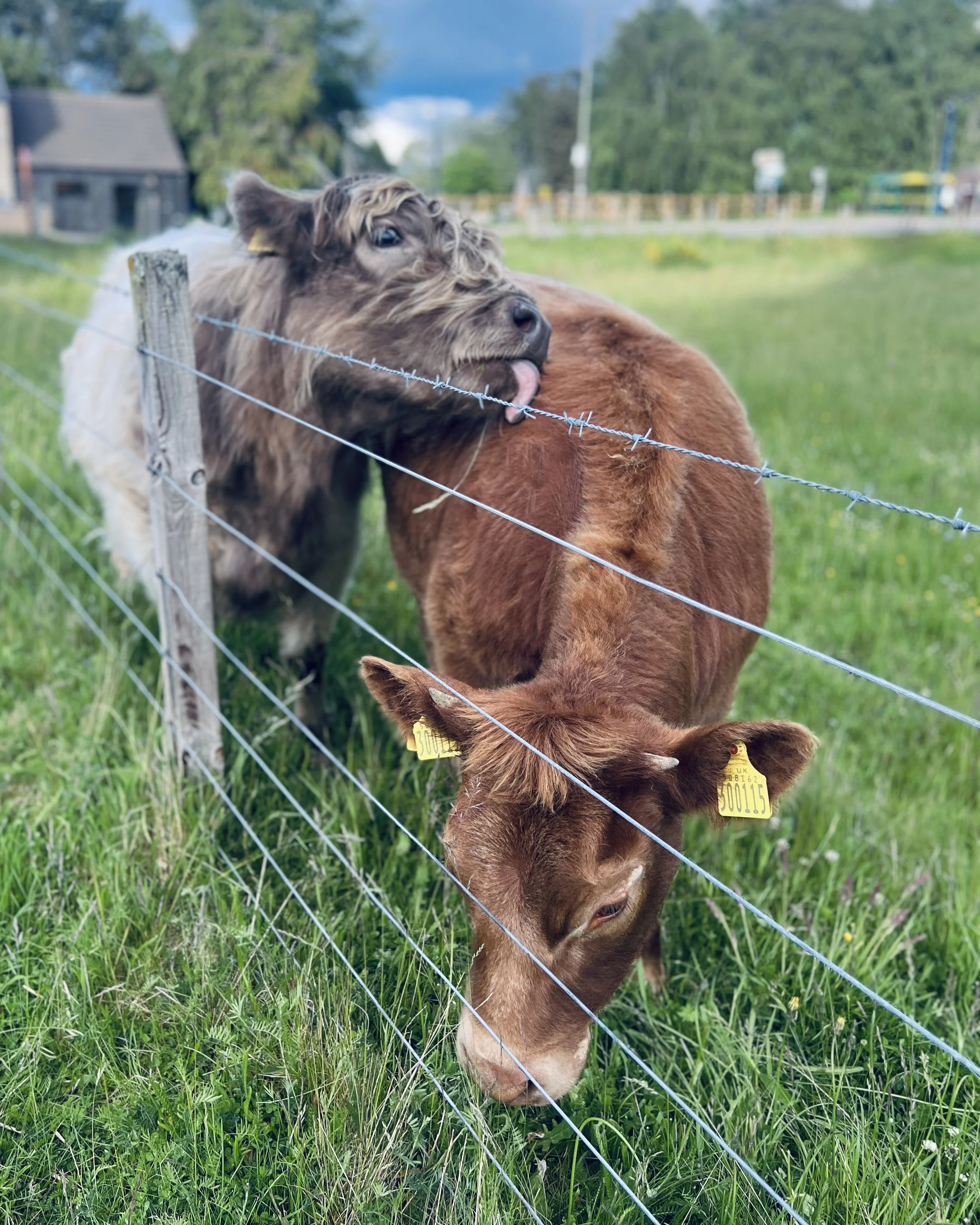
My new studio neighbours. They're a little nosy, but otherwise excellent company!
Making the space my own
I finally had the opportunity to design the environment in which I make and I've discovered that the space around my work matters to me almost as much as the functionality of making it.
I've always had a passion for interior design, so thinking about the studio as a space rather than simply a workshop came quite naturally. I've often found myself drawn to beautiful shops and gallery spaces, not just because of the things they contain, but because of the way those things are presented. The right surroundings can make you stop and look at an object differently, and consider how it might feel in your own home.
That thinking found its way into the studio. I wanted the space to work brilliantly as a pottery studio, but I also wanted my ceramics to feel at home within it. Rather than treating the practical and aesthetic sides separately, I tried to make decisions that did both.
Pottery involves a surprising amount of plastic. Tubs for clay, slip and glaze seem to multiply, and in my old studio they were always visible, stacked wherever there happened to be room. Here, I've housed them inside a bank of old wooden lockers. Everything I need is close at hand, but the visual clutter of a working pottery studio can disappear behind closed doors.
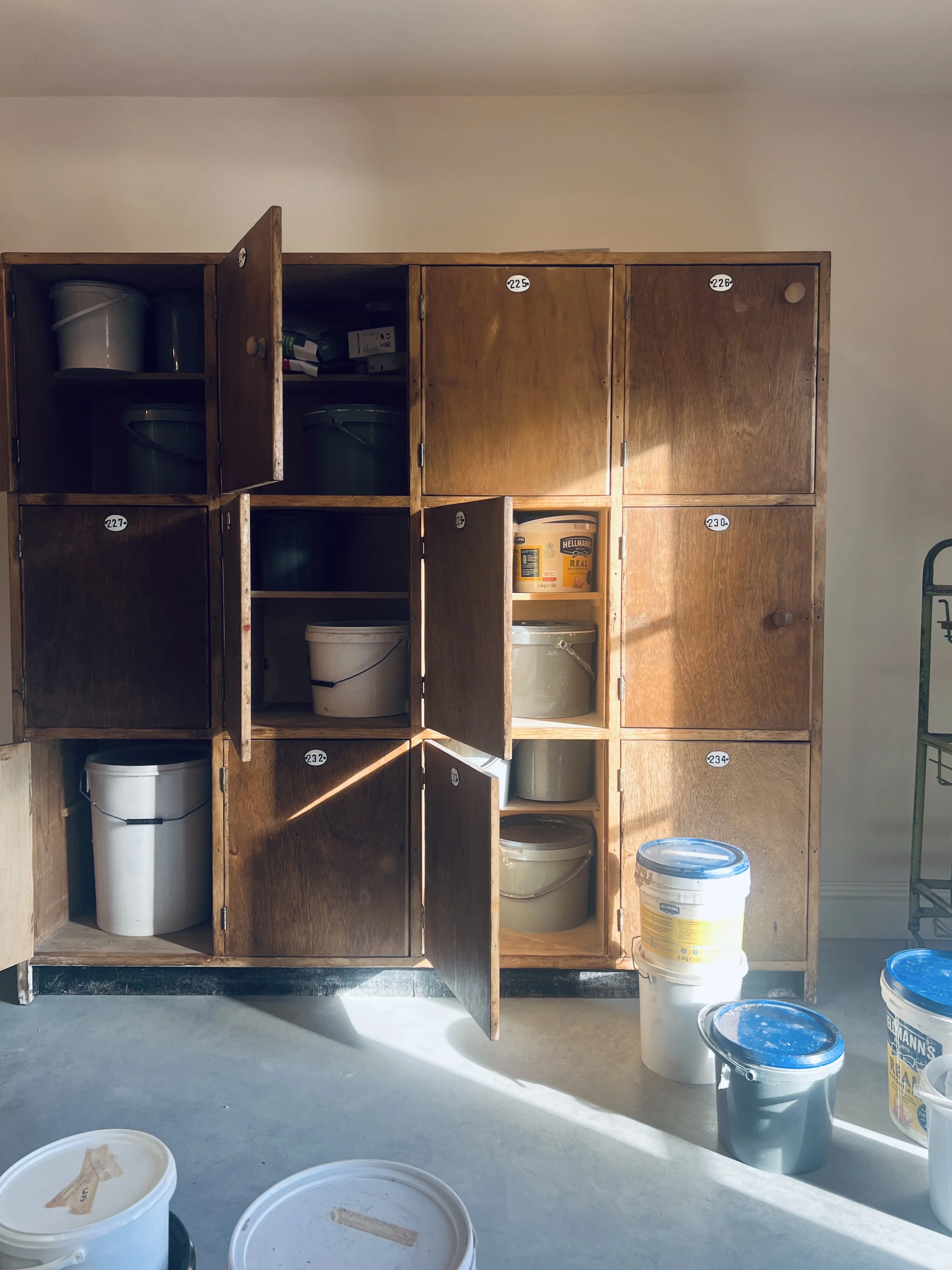
Possibly my favourite studio find: a bank of old wooden lockers. And the rather less photogenic reality hiding behind them...
I've tried to reuse and salvage wherever I could. The workbench that now houses my sink came from Glasgow Salvage in Paisley, while much of the furniture and smaller pieces came from my partner's stock at Beag and Small. The concrete floor, old timber, exposed copper and vintage furniture sit alongside the cleaner lines of the studio itself. I like that it doesn't feel brand new or overly polished. Things already have a history and, inevitably, they're gathering a few more marks now they're being used every day.
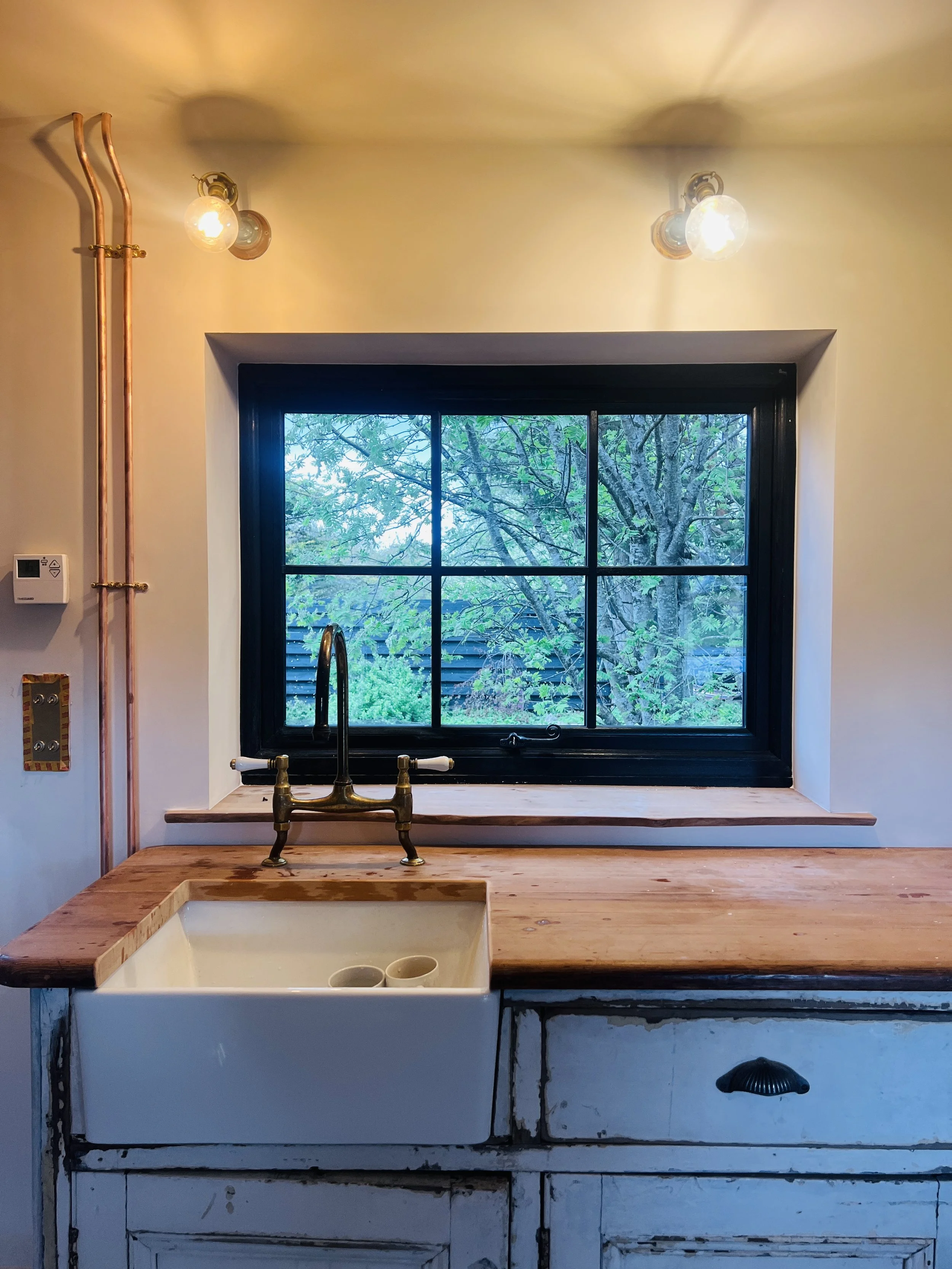
An old workbench from Glasgow Salvage in Paisley, repurposed to house my studio sink.
One wall is the original bare granite stone, which has already become one of my favourite places to photograph my work.
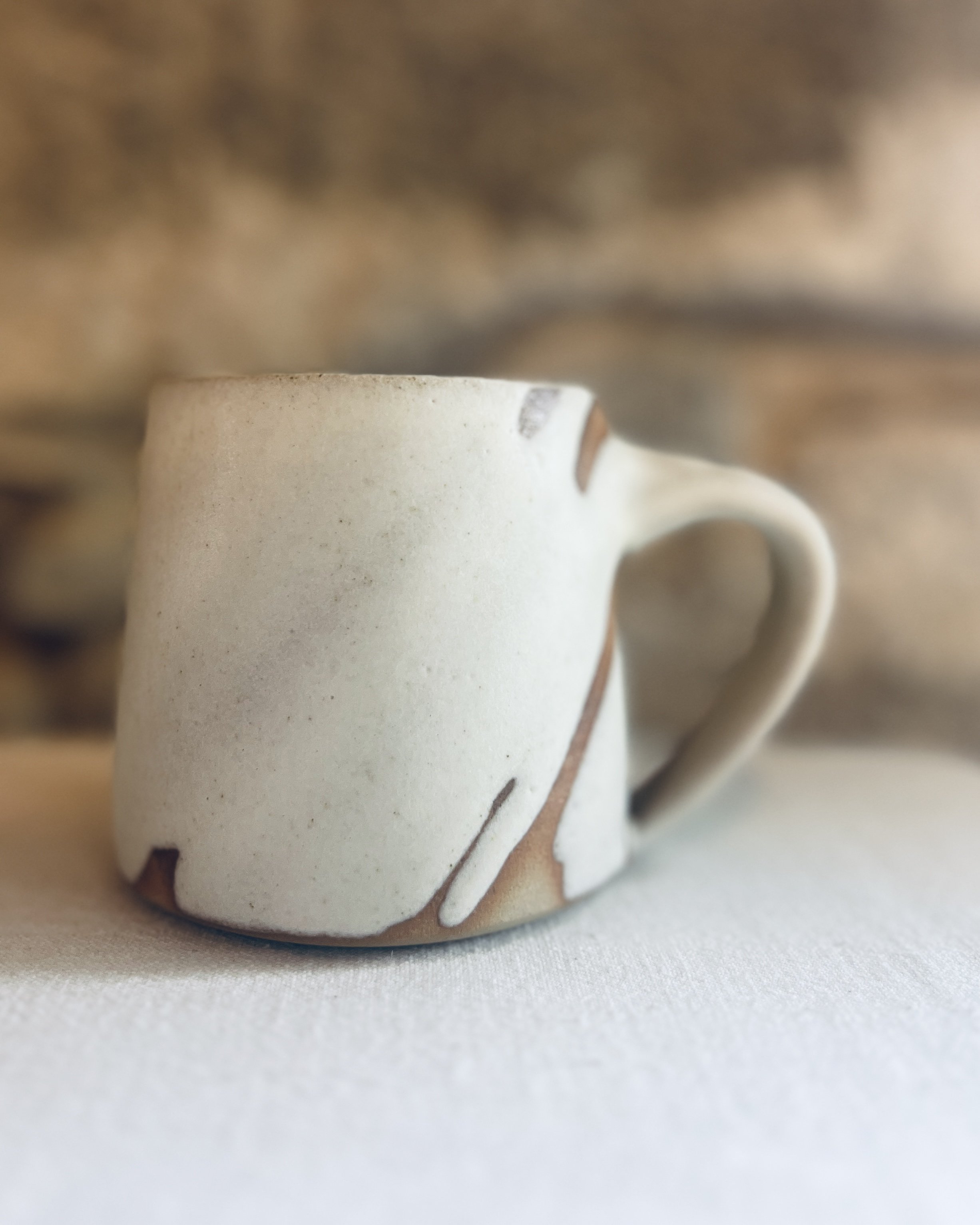
The original granite is now one of my favourite backdrops for photographing my work.
I stripped away years of old mortar by hand to bring the stone back to life. It took days but was worth every hour once I saw it clean.
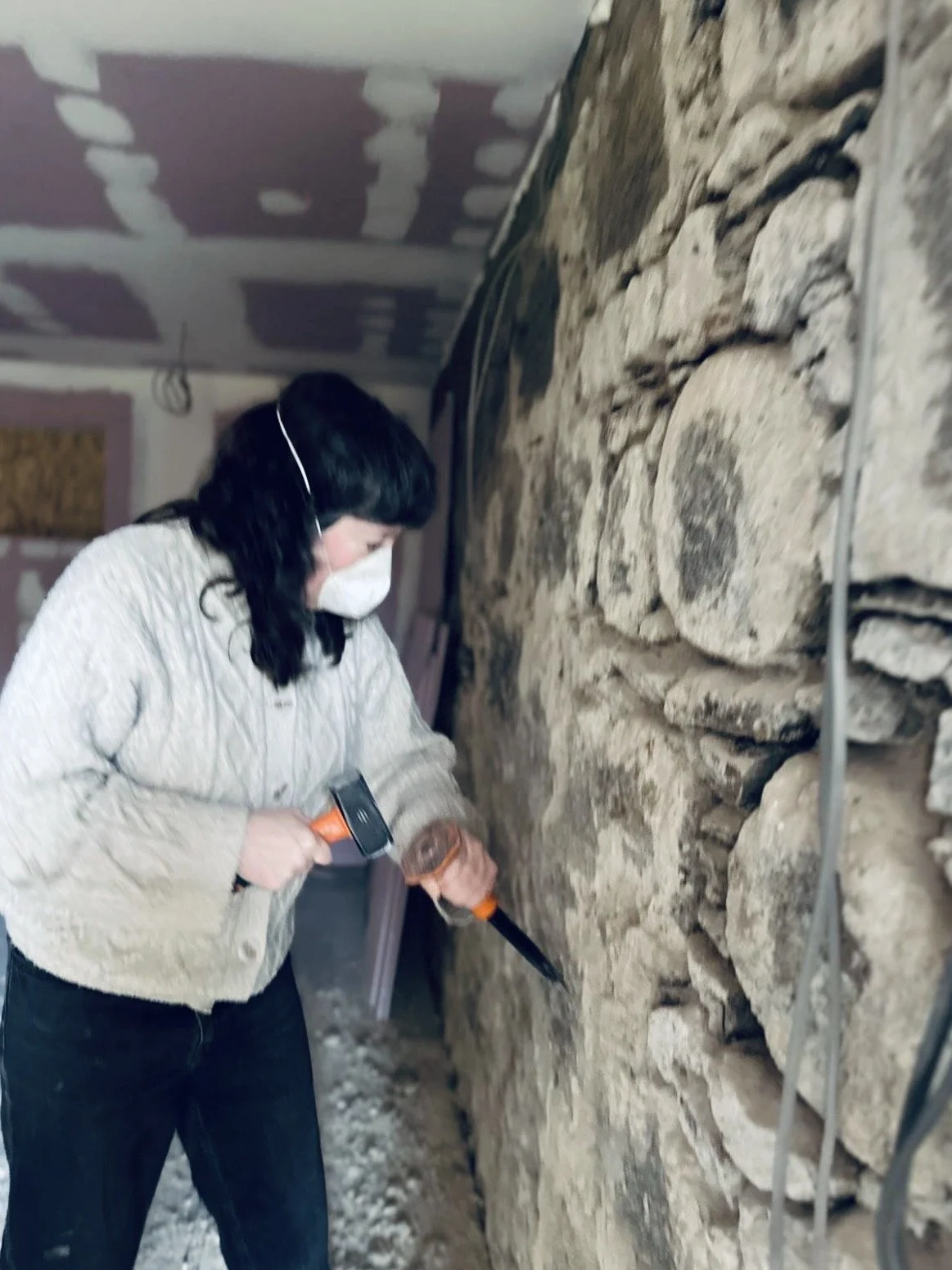
Several dusty days, a hammer and chisel, and a decision I occasionally questioned.
The wooden lockers will become another backdrop and I'm looking forward to photographing more of my ceramics both in the studio and around our home. I've always preferred seeing handmade objects in a real interior, where you can get a sense of how they might actually live alongside everything else.
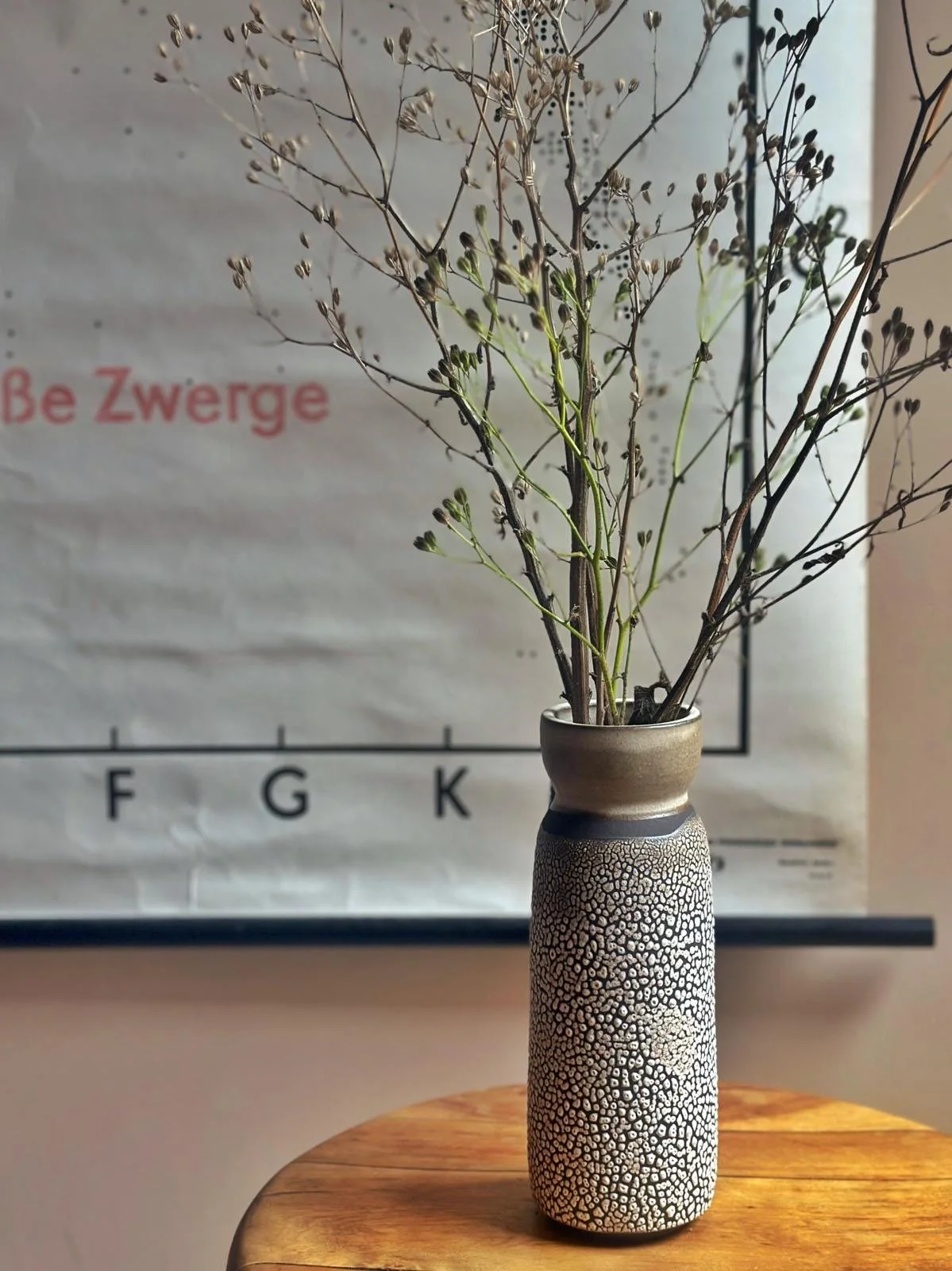
I love seeing ceramics in the context of a home, surrounded by the things we live with.
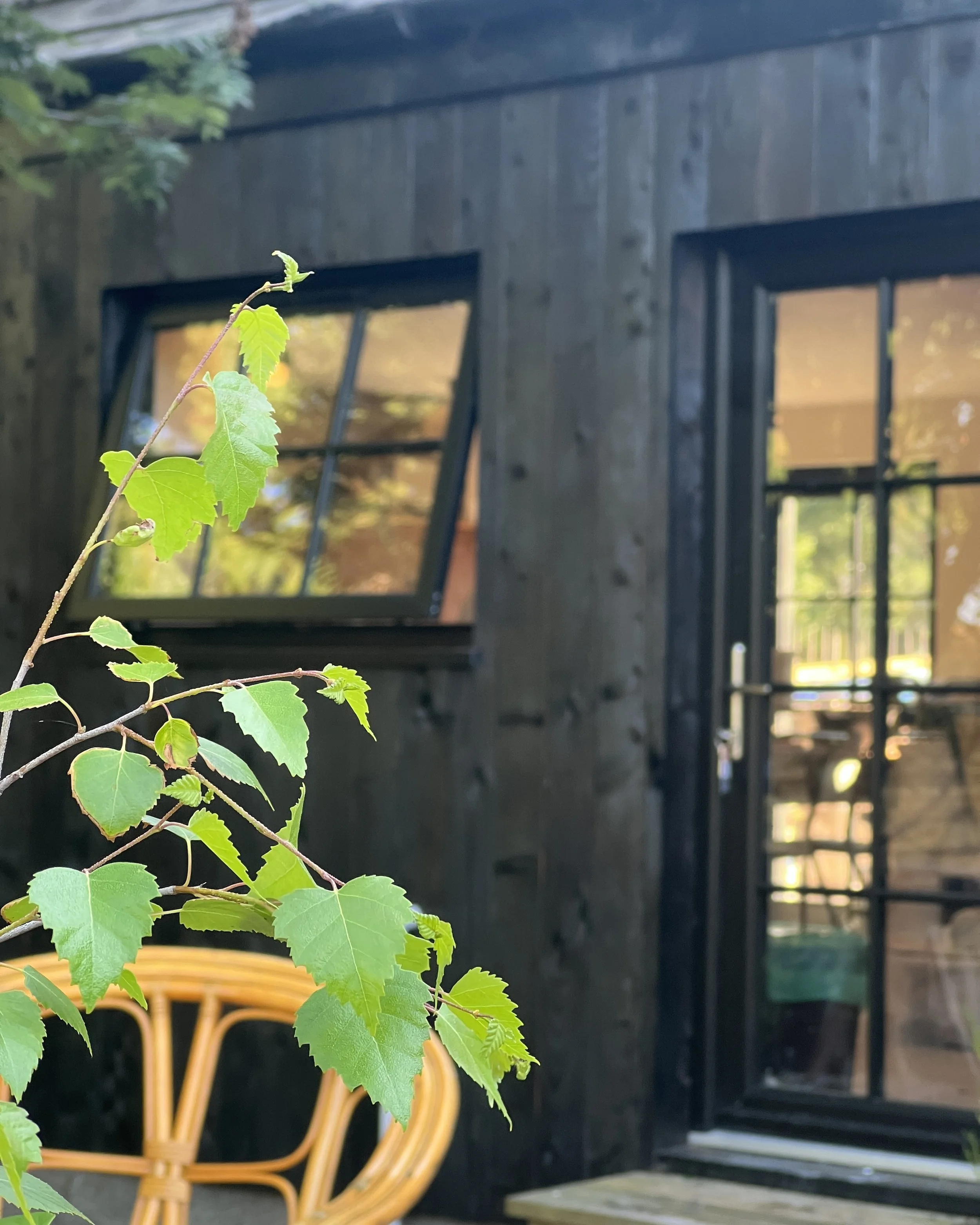
The outside of the studio became another labour of love. I burned the timber cladding myself, panel by panel, to create its deep blackened finish.
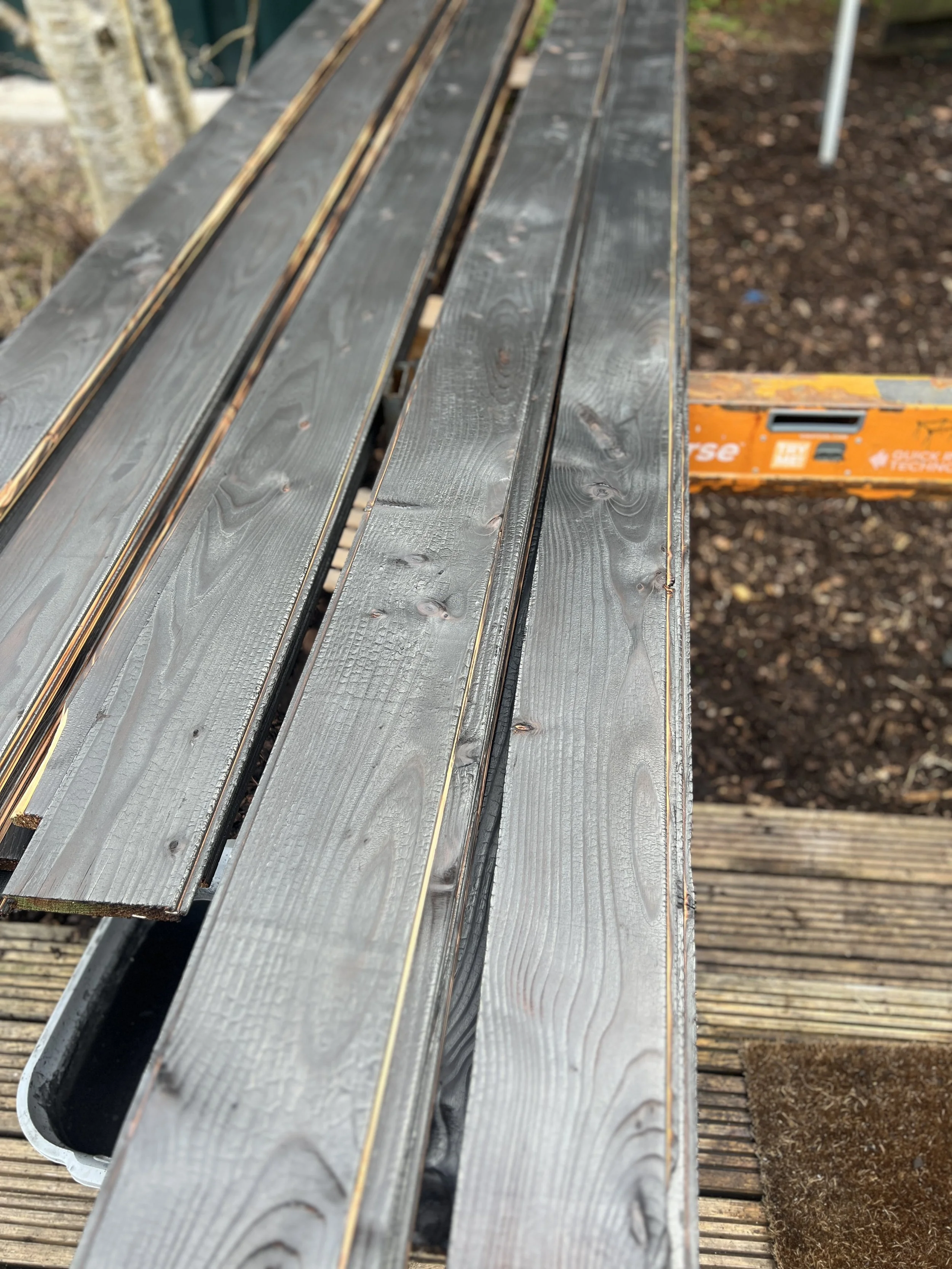
Burning the timber cladding, one board at a time. Took longer than I care to admit to.
Perhaps unsurprisingly, I've ended up creating a space that shares a visual language with the ceramics I make. Natural textures, black and muted tones, stone and timber, old things alongside new, and materials that are allowed to show some character rather than looking too perfect.
The studio is still very much a work in progress. These photographs were taken during its first few weeks before I've had time to add all the softer, more personal layers I have in mind. There will be linen curtains, somewhere to hang and store the dried foliage I collect, and the bare white walls behind my workbenches are already crying out for some handmade tiles. I've never made tiles before so I'm rather tempted to use the studio itself as an excuse to experiment with making my own.
I don't really want the space ever to feel completely finished. Like any working studio, I'd rather it evolves naturally through use, with objects finding their place, new ideas being tried out and the room gradually gathering its own history.
A different way of working
Having my pottery studio at home has changed the rhythm of running my business too.
There is something wonderfully simple about walking a few steps from the house and being at work. My commute certainly requires rather less planning than it used to.
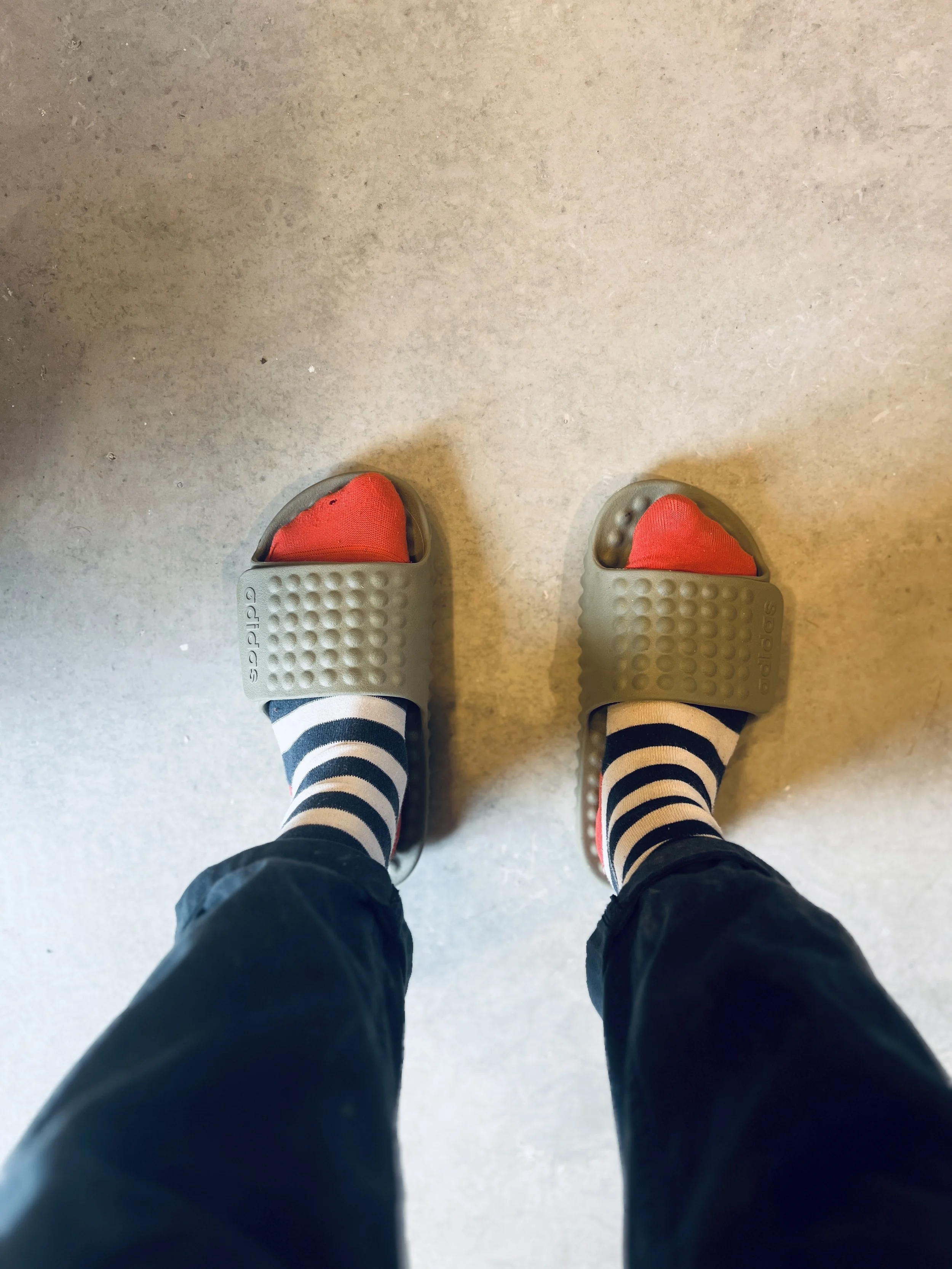
The new studio commute.
I can check a kiln, pack an order or spend an hour experimenting without it needing to become an entire trip to the studio. Equally, I can shut the door at the end of the day and leave it all behind.
I'm also much happier inviting people into this studio. I could, and did, welcome stockists and customers to my previous space, but it wasn't somewhere I particularly enjoyed showing people around. This feels completely different. I'm proud of the space I've created and I love being able to show people not just the finished ceramics, but where and how they're made.
More than anything, working somewhere that feels calm and considered has changed how I feel when I'm making. When you spend so many hours in one room, I've realised that what surrounds you really does matter.
Space for what comes next
Perhaps the biggest change is harder to photograph.
Having more room isn't only making the practical side of the business easier. It's giving me space to experiment.
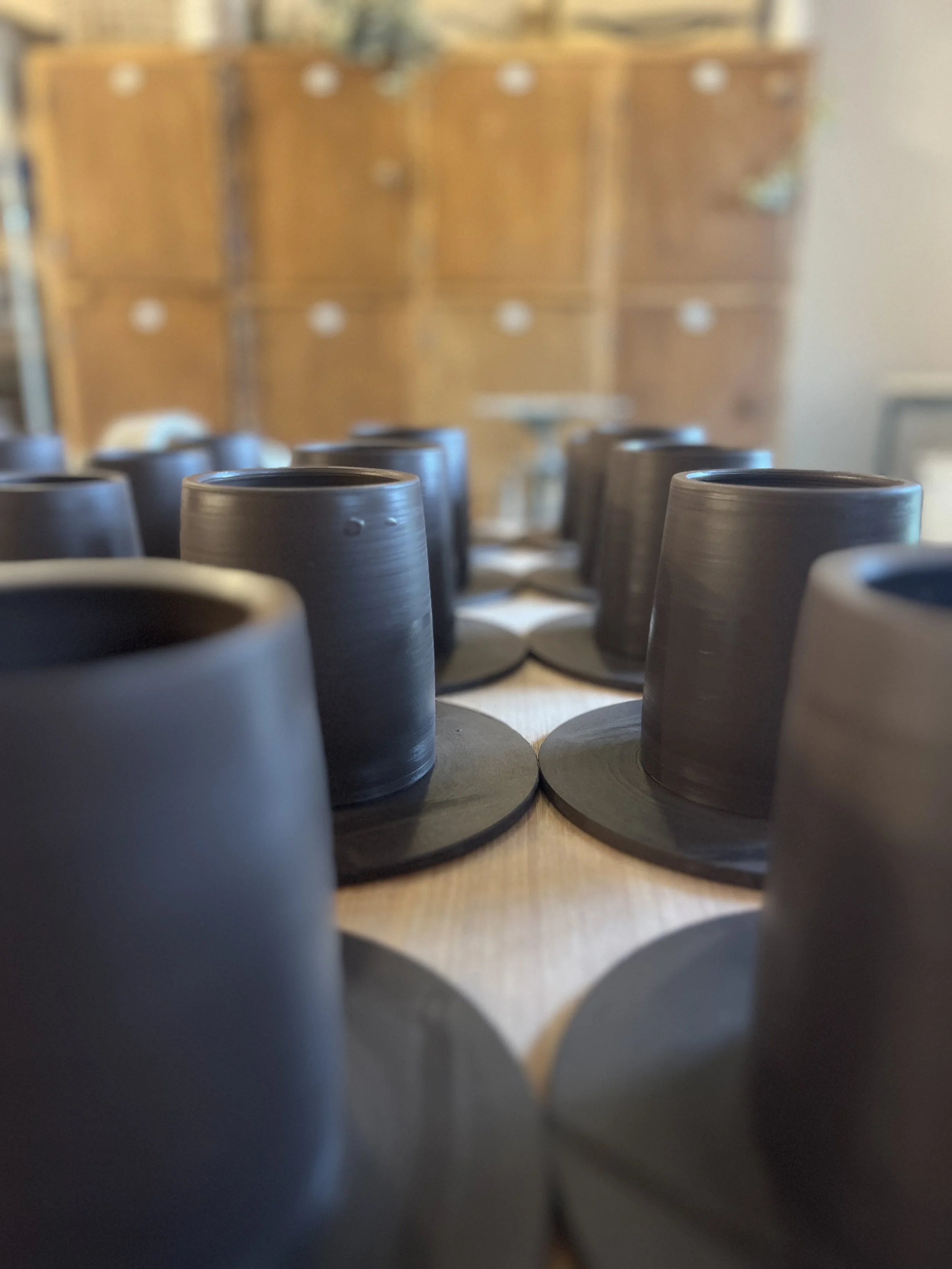
Work in progress in the new studio.
Since returning to the Cairngorms, I've found myself thinking more deeply about landscape, memory and our connection to place. Having a permanent studio gives me room to explore those ideas through new forms, surfaces and materials, alongside the functional ceramics I already make.

And now the landscape that has inspired so much of my work isn't something I'm remembering from elsewhere. It's immediately outside the studio door.
More than anything, it feels as though the studio finally matches the story I've been trying to tell through my work. Grounded, considered and connected to this place.
If you're passing through Carrbridge and would like to visit the studio, you're very welcome to get in touch and arrange a time. Come and see where the pots are made.